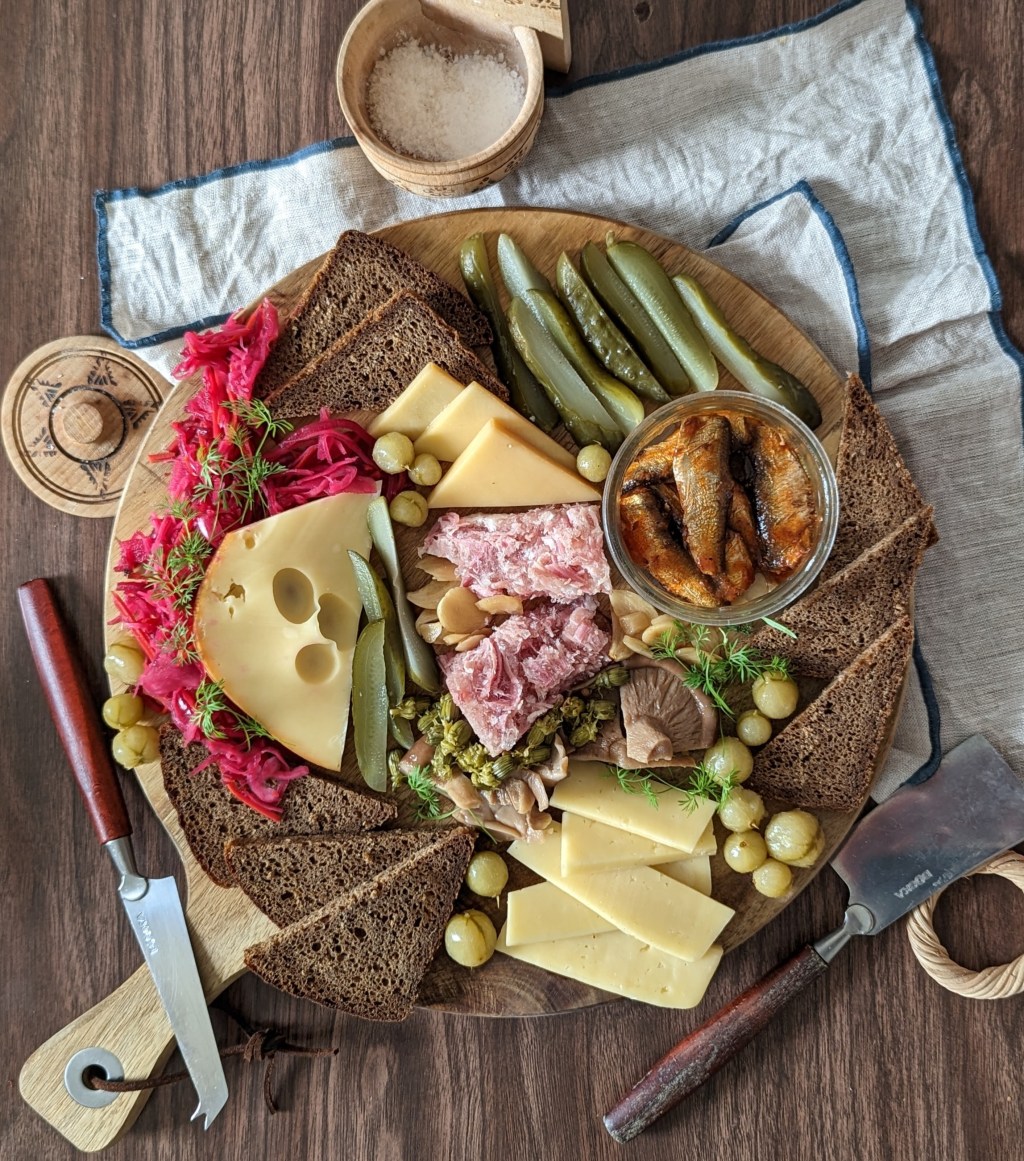
I used to work in the artisan cheese industry, so cheeseboards hold a special place in my stomach. There are no hard-and-fast rules to a cheeseboard – but typically 3-5 cheeses, a fruit component, a pickle component, some great bread/crackers and some charcuterie. I wanted to provide some ideas for something other than a basic baguette-and-brie with red pepper jelly type of board, and introduce some things that you’ll easily find at an Eastern European grocer. This is a perfect accompaniment to some ice cold Czech pilsner or Polish lager, a full-bodied white wine (try a biodynamic South African Chenin Blanc or unoaked chardonnay). Whether you’re sharing with friends or eating ‘girl dinner’ by yourself, learning to craft a well-rounded cheeseboard is a great back-pocket skill to have.
You’ll need:
3 different cheeses – one soft, one firm, one smoked
dark rye bread
2-3 different types of pickles (cucumbers, tomatoes, beans, garlic, mushrooms)
fruit compote or preserved fruit (sour cherry jam or jarred sour cherries, preserved gooseberries or apricots, fermented apples are all good options)
high-quality tinned fish (I love smoked Latvian sprats)
fresh vegetable salad (shredded beets and cabbage is my go-to)
Have fun and explore your local Eastern European grocer or deli. Here’s some ingredient inspiration to get you started:
Borodinsky bread:
Dark, Eastern European rye bread is a must for a Ukrainian cheeseboard. Made with molasses, caraway and cumin, Borodinsky bread is moreish, healthy and packed with flavour and gut-friendly microbes when made in the traditional sourdough process. I picked up this one imported from Lithuania, but have made my own with great results (recipe to come).
Smoked sprats:
While you’ll often find high-quality tinned sardines at Mediterranean and Iberian specialty stores, sprats are the tiny fish of choice in Baltic, Eastern and Northern Europe. Smaller than sardines and with a meatier flavour, smoked Latvian sprats (brand, ‘Riga Gold’ is popular in North America) are a delicious treat on dark rye; I used the smoked ones packed in tomato sauce here. I have fond memories of eating paper cones full of crispy, salty, deep-fried sprats during the Kyiv Day food festival that takes place in Ukraine’s capital in May.
Cheeses: I typically like to do a mix of firm, soft and smoked when making cheeseboards with Eastern European treats. The smoked cheese is great for a strongly flavoured option (instead of blue, which I would typically include with French or British cheese selections) without overpowering the other intense flavours going on. Below are some ideas.
Monastyrskiy cheese – a firm cow’s milk cheese made in an Orthodox Monastery tradition, this one comes from Lithuania. This cheese is firmer than the most popular Belgian or French monastic or Trappist washed-rind cheeses (although a broad category, it’s hard to pin down) and more akin to the alpine Swiss monastic cheeses.
Zamorskiy cheese – this cheese is made in Krasnystaw, Poland. Another firm style, cooked-paste style made with cow’s milk, this cheese is made with vegetarian rennet and has an addition of annato.
Smoked Krowlewski cheese – Made with cow’s milk by the Sierpc dairy cooperative in the region of Masovia, this hard, alpine-style cheese boasts large holes and is lightly smoked with a blend of natural wood from the area.
Studenets:
Sudenetz, holodetz, or, the less romantic English name – headcheese. While I never developed a taste for this Ukrainian specialty as a kid (the liberal use of gelatin freaked me out when I saw slab of it on the dinner table at Easter time), I’ve come to like the fine-grind studenetz as an adult. You can often find the coarse-grind, chunky meat jelly at most markets, but I find that the texture on the finer-grind variety is similar to a pate, which I personally prefer. My sister and dad eat slabs of it covered in white vinegar, which is a nice addition that cuts through the fatty pork and unctuous gelatin. Studenetz is traditionally made with the neck and/or head of a pig, with the aspic derived from boiling the whole damn thing for a long time before chopping the meat into chunks or grinding it through a food mill. Today it’s generally made with ready-to-use gelatin. This is a good example of Ukrainians using every part of the animal – an important step in ethical meat consumption.
Preserved fruit:
Gooseberries, cherries, apricots – use stone fruit or berries on your board and make a delicious kompot with the syrup and leftover fruit afterwards.
Beet + cabbage salad:
Fresh, earthy, sweet and sour – all of the components that deliver a true Ukrainian experience on a cheeseboard. Whether used in between cheeses as a palate cleanser or heaped onto your plate by the spoonful, any variation of this shredded salad is a great addition to a cold lunch. You can usually find a version of this salad in jars at your specialty Ukrainian or Polish shop, but if you’d like to make it yourself, you can whip up a quick version by shredding 2 parts each of raw red beets and white cabbage, one part shredded carrot and one part shredded white onion. Add a generous splash or two of white vinegar and season with salt and a small amount of sugar to taste (there’s plenty of sweetness from the carrots and beets, so just add enough to bring out the flavours). I like to crack some black pepper over the top as well.
Pickles: Learn to love lacto-fermented foods. In addition to the long list of benefits to your gut health, the taste and texture of lacto-fermented cucumbers and tomatoes are far superior to the run-of-the-mill vinegar brine pickles from the supermarket. You can make your own, or find a brand you love from an Eastern European grocer. Don’t chuck the brine after you’re done the veg, either – save it for cocktails (a splash in a Caesar or a martini is great) or throw some new vegetables in the jar until they’re submerged, add a generous pinch of salt and leave it in a warm, dark place to ferment for a couple of weeks (you can find some great Fermentation 101 tutorials online, and it’s pretty easy to do once you have it started). Pickled garlic is a fantastic addition to a cheeseboard, especially alongside the smoked cheese.
Fresh herbs: I love adding fresh dill to a board. It provides a pop of bright green and is an excellent palate cleanser between all the strong flavours.
Pre-slice your bread, lay out your cheeses and accoutrements and pour you and your friends a shot of horilka to toast – to cheese!
 UKRAINADIAN